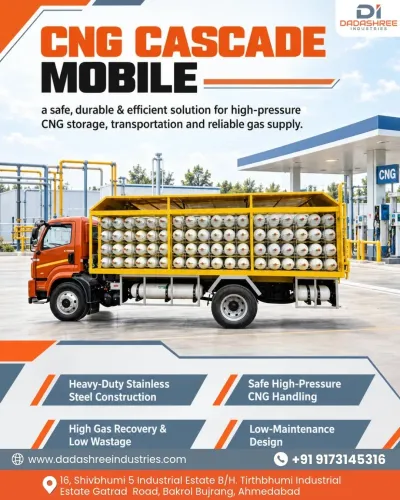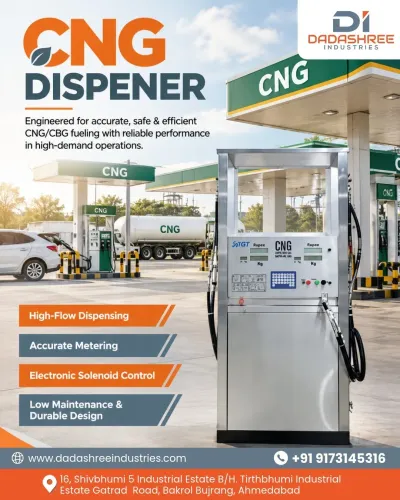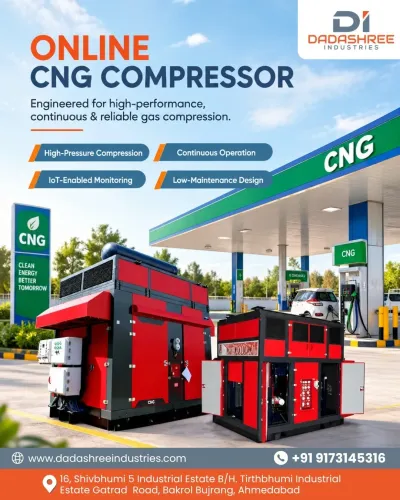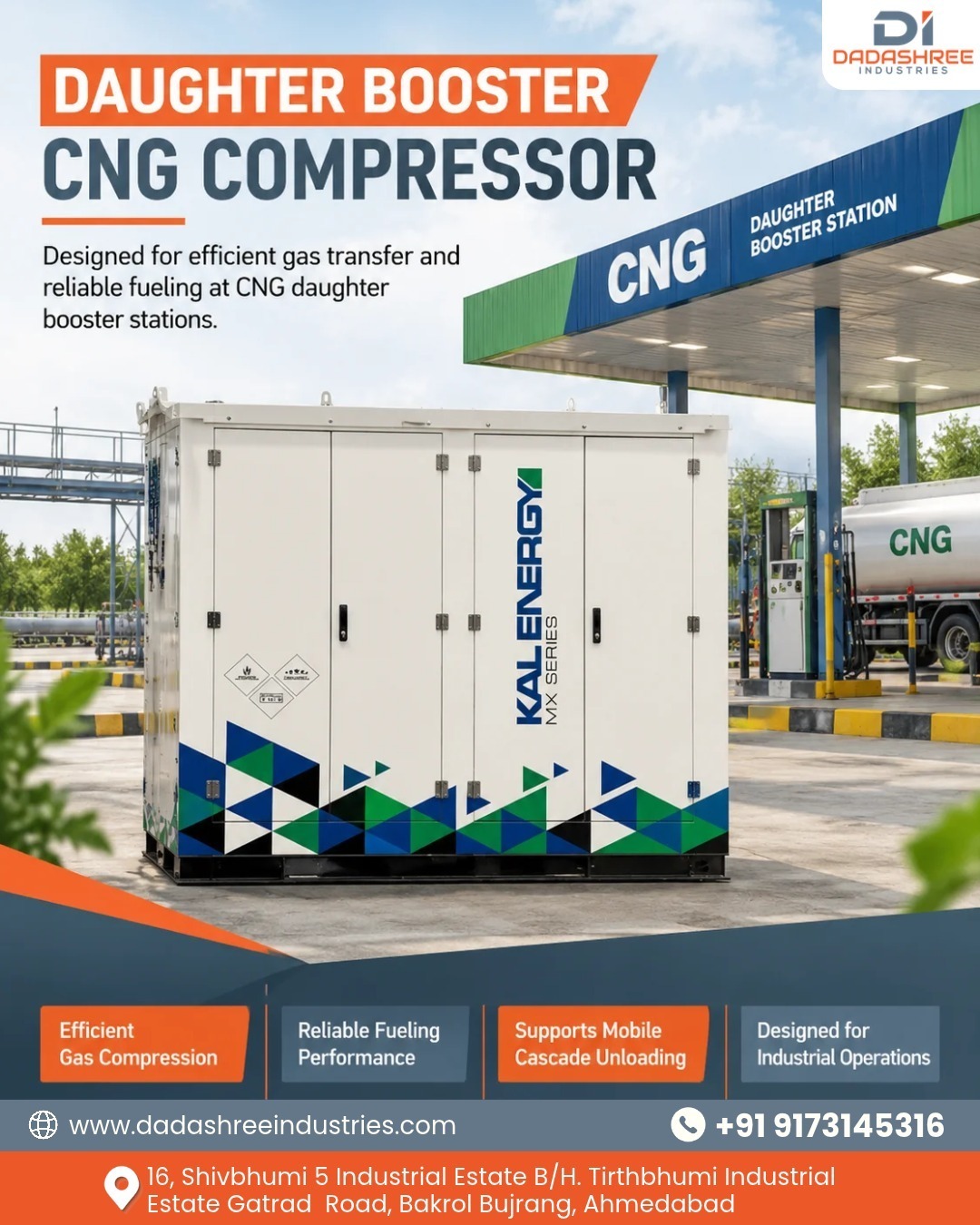
Are you looking for a reliable CNG Daughter Booster Compressor Manufacturer in Ahmedabad for your CNG fueling station or gas distribution project? A CNG daughter booster compressor is a key piece of equipment for suitable CNG daughter station configurations, supporting gas transfer, cascade unloading, and efficient fuel distribution.
As demand for Compressed Natural Gas (CNG) grows, choosing the right gas compression equipment is essential to keep station operations reliable. A properly selected booster compressor can help improve gas recovery, support consistent performance, and optimise operating efficiency.
Dadashree Industries provides CNG daughter booster compressor solutions for industrial gas transfer and CNG fueling applications. This guide explains how a CNG daughter booster compressor works, its key features, major benefits, applications, and the factors to consider when selecting a suitable system.
What Is a CNG Daughter Booster Compressor?
A CNG Daughter Booster Compressor is specialised equipment designed to increase compressed natural gas pressure for a station's gas transfer system. It can support transferring CNG from mobile cascade trailers to designated storage or dispensing systems, depending on the station's engineering design.
CNG daughter stations typically receive compressed natural gas through mobile cascade trailers supplied by a mother station or another gas source. During unloading, the pressure difference between the cascade and the receiving system may decrease. A suitable booster compressor can help maintain gas transfer and recover additional usable gas within the system's operating limits.
For CNG station operators, selecting a properly designed booster compressor can support dependable fueling operations and improve gas utilisation.
How Does a CNG Daughter Booster Compressor Work?
A CNG daughter booster compressor receives gas at an inlet pressure and compresses it to a higher discharge pressure for the intended application.
The general operating process includes:
1. CNG supply: Compressed natural gas arrives at the daughter station in a mobile cascade trailer.
2. System connection: The cascade is connected to the approved gas unloading arrangement.
3. Pressure boosting: The compressor increases gas pressure when required by the station configuration.
4. Gas transfer: The compressed gas moves to the designated storage or dispensing system.
5. Monitoring and control: The system monitors pressure, temperature, and other operating parameters to support safe operation.
The actual process depends on the station layout, cascade pressure, compressor capacity, and dispensing requirements. Proper system design is essential for safe and effective performance.
Key Features of a CNG Daughter Booster Compressor
When choosing a CNG booster compressor for industrial use, businesses should evaluate the following features.
1. Efficient Gas Compression
Efficient compression supports gas transfer under varying inlet pressure conditions. Select the compressor based on the required inlet pressure, discharge pressure, gas flow rate, and operating duty.
2. Reliable Fueling Performance
A properly sized CNG daughter booster compressor helps maintain suitable pressure conditions for the intended gas transfer process, supporting reliable station operation.
3. Mobile Cascade Unloading Support
The compressor can help improve gas recovery from mobile cascade trailers when declining pressure limits further gas transfer through pressure equalisation alone.
4. Industrial-Grade Construction
CNG equipment must be suitable for high-pressure natural gas service. Appropriate materials, pressure-rated components, and robust construction support long-term reliability.
5. Advanced Monitoring and Controls
Depending on the model, monitoring and control systems may include pressure gauges, temperature sensors, control panels, and automatic shutdown functions. These features help operators monitor operating conditions and identify potential issues.
6. Safety Protection Systems
Safety provisions may include pressure relief devices, over-temperature protection, gas leak detection, and emergency shutdown systems. Exact requirements vary by installation setup, compressor design, and relevant regulatory standards.
7. Maintenance-Friendly Design
Accessible service components and clear maintenance procedures can help simplify inspections, reduce downtime, and support long-term equipment performance.
Major Benefits of a CNG Daughter Booster Compressor
1. Improved Gas Recovery
A suitable booster compressor can recover usable gas from mobile cascades at lower inlet pressures, depending on the compressor's specifications and station design.
2. Better Operational Efficiency
Efficient gas transfer can streamline cascade unloading and support day-to-day operations at CNG daughter stations.
3. Reliable Gas Transfer
Correctly selected and maintained equipment helps maintain the pressure conditions required for the intended gas transfer process.
4. Better Gas Utilisation
By recovering gas that might otherwise remain in a mobile cascade, a booster compressor can improve overall gas utilisation. Actual results depend on operating conditions, energy consumption, and system design.
5. Support for CNG Distribution Networks
Daughter stations help distribute CNG to locations without direct pipeline access. Booster compressors can support suitable configurations within these distribution networks.
6. Long-Term Cost Management
Although equipment cost, energy consumption, and maintenance must be considered, improved gas recovery may contribute to lower operating costs over the equipment's service life.
Applications of CNG Daughter Booster Compressors
CNG daughter booster compressors can be used in various applications where their technical specifications match system requirements.
* CNG daughter stations: Supporting gas transfer from mobile cascade trailers.
* Cascade unloading systems: Helping recover usable gas at reduced inlet pressures.
* CNG distribution networks: Supporting gas delivery to remote fueling locations.
* Industrial gas supply systems: Facilitating compatible high-pressure natural gas transfer.
* CNG fueling infrastructure: Supporting appropriately engineered storage and dispensing arrangements.
Before installation, evaluate the compressor for gas composition, pressure range, required flow rate, operating conditions, and applicable safety standards.
How to Choose the Right CNG Daughter Booster Compressor
Choosing the right equipment matters for station performance, safety, and long-term operating costs. Consider these factors before purchasing a CNG booster compressor.
Inlet and Discharge Pressure
Check the expected inlet pressure range and the required discharge pressure. The selected compressor must operate within its specified pressure limits.
Gas Flow Capacity
Choose a compressor with a flow capacity suitable for your station's unloading frequency, gas demand, and operating schedule.
Power Consumption
Evaluate the required power supply and expected energy consumption to estimate operating costs.
Safety and Compliance
Confirm that the compressor, associated piping, instruments, and installation meet the applicable safety and regulatory requirements.
Maintenance and Spare Parts
Review maintenance intervals, service accessibility, spare-part availability, and technical support.
Manufacturer Experience and Documentation
Request model-specific technical specifications, performance curves, test documentation, warranty details, and installation requirements before you decide to purchase.
Dadashree Industries: CNG Daughter Booster Compressor Manufacturer in Ahmedabad
If you are looking for a CNG Daughter Booster Compressor Manufacturer in Ahmedabad, contact Dadashree Industries for information on CNG booster compressor solutions for industrial gas transfer and fueling applications.
When evaluating a compressor for your project, discuss your station configuration, cascade unloading requirements, inlet pressure, discharge pressure, and required gas flow rate with the supplier. These details help determine whether a model suits your application.
Contact Dadashree Industries to request product information and discuss your equipment requirements.
Why consider Dadashree Industries?
* Product inquiries for CNG daughter booster compressor applications.
* Technical discussions based on station operating requirements.
* Information about model specifications and available configurations.
* Assistance with evaluating equipment suitability for your project.
CNG Daughter Booster Compressor Supplier in Gujarat
Choosing a dependable CNG Daughter Booster Compressor Supplier in Gujarat involves more than comparing equipment prices. Buyers should assess product suitability, technical documentation, maintenance requirements, and the supplier's ability to provide relevant support.
For CNG station developers, gas distribution companies, and industrial operators, a supplier should clarify the compressor's operating limits and provide the information needed for engineering evaluation.
Before placing an order, request:
* Detailed product specifications.
* Rated inlet and discharge pressure.
* Gas flow capacity and power requirements.
* Applicable safety and compliance documentation.
* Warranty and maintenance information.
* A quotation based on the project requirements.
These checks can help businesses select suitable equipment and plan for long-term operation.
CNG Daughter Booster Compressor Distributor in India
Businesses searching for a CNG Daughter Booster Compressor Distributor in India should prioritise equipment quality, application suitability, technical support, and transparent commercial terms.
Whether you are planning a new CNG daughter station or upgrading an existing facility, the right compressor depends on the required pressure, gas flow, unloading process, and operating duty.
Contact Dadashree Industries to discuss your requirements and confirm available models, supply arrangements, and delivery details.
Frequently Asked Questions (FAQs)
1. What is a CNG daughter booster compressor used for?
A CNG daughter booster compressor is used in suitable station configurations to increase gas pressure and support gas transfer from mobile cascade storage to designated station equipment.
2. How does a CNG daughter booster compressor improve gas recovery?
It can help transfer usable gas from a mobile cascade when declining inlet pressure limits pressure-driven unloading. Recovery depends on system design and operating conditions.
3. What are the main features of a CNG daughter booster compressor?
Key features to evaluate include compression capacity, inlet and discharge pressure range, gas flow rate, control systems, safety protection, industrial-grade construction, and ease of maintenance.
Keywords